What Happens to Passport Stamps When Your Passport Expires?
Passport stamps stay in your expired booklet. Learn when old passports are returned, how valid visas may work, and ways to preserve your travel memories.
Passport stamps do not disappear when your passport expires. The ink remains on the pages of the old booklet; renewal does not transfer that travel history into your new passport. Whether you can keep the original depends on the issuing country's rules and the circumstances of your application. A valid visa in the old passport is a separate question, governed by the destination's requirements.
That distinction matters when a passport has become more than a document. A few centimeters of ink can recall a whole journey: the date you arrived, the border you crossed, the person waiting beyond the doors. Before sending the booklet away, it is worth knowing what will come back.
Expiry changes the document's validity, not its pages
Expiration and cancellation are different events. A passport can reach its expiry date while still sitting in your drawer. Renewal may involve sending it to the issuing authority, which cancels it and may return it, depending on the applicable process.
Cancellation can leave a visible mark. British passport-office cancellation guidance, for example, describes cuts to covers and personal-details pages, with methods differing by booklet type. That administrative treatment is different from the passport simply expiring.
Your new booklet begins a new physical record. The old stamps remain in the old document if it is retained, though damage or official cancellation may affect parts of the booklet. Photograph pages you care about before submitting it; return policies are not a guarantee that every original page will remain untouched.
Can you keep your old passport? Three official examples
The examples below concern the specified countries and application routes. Official guidance was checked on 14 October 2026.
United States: mail and online renewal differ
The US Department of State says it returns the old passport after renewal by mail, unless it is damaged or intentionally altered. It may arrive separately, up to four weeks after the new passport.
Eligible applicants renewing online keep their most recent passport rather than mailing it in. The same guidance says you cannot use the old passport for travel after applying for the new one. Keeping the physical booklet does not mean it remains usable for travel.
United Kingdom: the previous booklet is returned
GOV.UK's adult renewal guidance requires the old passport as a supporting document. Its section on unexpired visas confirms that the previous passport will be returned. Returned documents can therefore remain part of your personal travel archive, even though the passport has been replaced.
Treat a routine renewal differently from a lost or stolen passport. HM Passport Office's application guidance says a passport found after being reported lost or stolen must be returned to the office. Finding it later does not make it an ordinary souvenir booklet you can simply keep using.
Canada: request its return on the application
Canada's adult simplified renewal form, PPTC 054, for eligible Canadians applying in Canada or the US, asks whether you want the previous passport returned. If neither choice is checked, the form says it will be securely destroyed.
Its instructions also identify exceptions: a passport that is damaged and retained by the program, or was ever reported lost or stolen, will not be returned. Complete the return section carefully and read the instructions for your application route, especially if the passport contains a visa you still need.
Why you should check your own authority
These examples show why “everyone gets their old passport back” is unreliable advice. The rules can differ by issuing country, renewal method, document condition and whether it has been reported lost or stolen. Applications made abroad may also use different forms or procedures.
Before submitting yours, check whether the old booklet must be sent, whether its return is automatic or requested, and whether any exception applies. Follow the actual application instructions rather than relying on a handwritten request alone.
What happens to a valid visa in an expired passport?
A passport's expiry date and a visa's validity are separate. Some destinations allow a qualifying visa to be used in an old passport alongside a new valid travel document. That is permission to use the visa under those rules, not permission to travel on the expired passport alone.
The country that issued your passport decides how it handles the booklet. The destination that issued the visa decides whether and how you can continue to use that visa.
A valid US visa
The US Department of State's visa FAQ says you can travel with the expired passport containing the visa and a new valid passport if the visa is still valid, undamaged and appropriate for your main purpose of travel. Both passports should be from the same country.
Do not remove the visa and put it in the new passport: the department says that invalidates it. Having the required documents also does not guarantee admission; the decision is made at the port of entry.
A valid Canadian visa
Immigration, Refugees and Citizenship Canada says you can travel to Canada with a valid visa in an old passport by bringing both that passport and a new valid passport or travel document. You may need to explain why the old passport is no longer valid. IRCC recommends obtaining a new visa in the valid passport to avoid border delays.
These are destination-specific examples, not a worldwide rule. Check the issuing embassy or immigration authority before traveling, particularly if your name, nationality or other details have changed. Don't assume guidance about a physical visa also applies to an electronic travel authorization.
Preserve the stamps without dismantling the passport
Keep the booklet intact. A stamp page may matter later for a visa, an application or a question about your travel history. Cutting out the most attractive stamp removes it from the dates and neighboring marks that help explain it.
Make a readable digital copy
Photograph the full page in even light, then take a closer image if a stamp is difficult to read. Include the page edges in the full-page photograph so you know where the detail came from. Check the saved image at full size: a thumbnail can conceal blurred dates.
Don't force the binding flat for a better picture. Give files useful names, such as passport-2015-2025-page-12, and record the country and readable date in a separate index. If part of a mark is illegible, label it as uncertain rather than guessing.
Keep an additional copy in a separate, secure location and periodically check that you can still open the files. A travel-journal entry and a photograph of the original stamp serve different purposes; it can be useful to keep both.
Store the original with care
The Library of Congress recommends cool, relatively dry, stable storage and limited light exposure for paper materials, with protective enclosures and no adhesive tape or glue on the paper. Those general principles are a sensible starting point for caring for old stamp pages: a protective box in a stable room is preferable to a sunny display or damp storage area.
If you want a framed print, use a copy and keep the booklet protected. Leave repairs to damaged or fragile originals to an appropriate conservator.
Keep document images separate from public memories
A passport can contain your identity details, document number and visa information even after expiry. Store complete document copies privately. When sharing a memory, use a carefully checked image that excludes those details, or use travel photographs and journal artwork instead.

A stamp records the crossing. You can record the day.
Once the pages are photographed, add what the ink cannot tell you. Who traveled with you? Where did you go after leaving the airport? What happened between that arrival date and the departure?
An official stamp may be the only dated object left from a trip. It can also be missing from a journey you remember perfectly. The European Union's Entry/Exit System, for travelers within its scope, records crossings electronically without stamping the passport. A personal history can include those journeys too.
If you have several old passports, bring their visits into one chronology. Keep the original source noted where useful, then attach a photograph and a few words. Our guide to tracking the countries you've visited offers a simple way to organize that history, including uncertain dates and repeat visits.
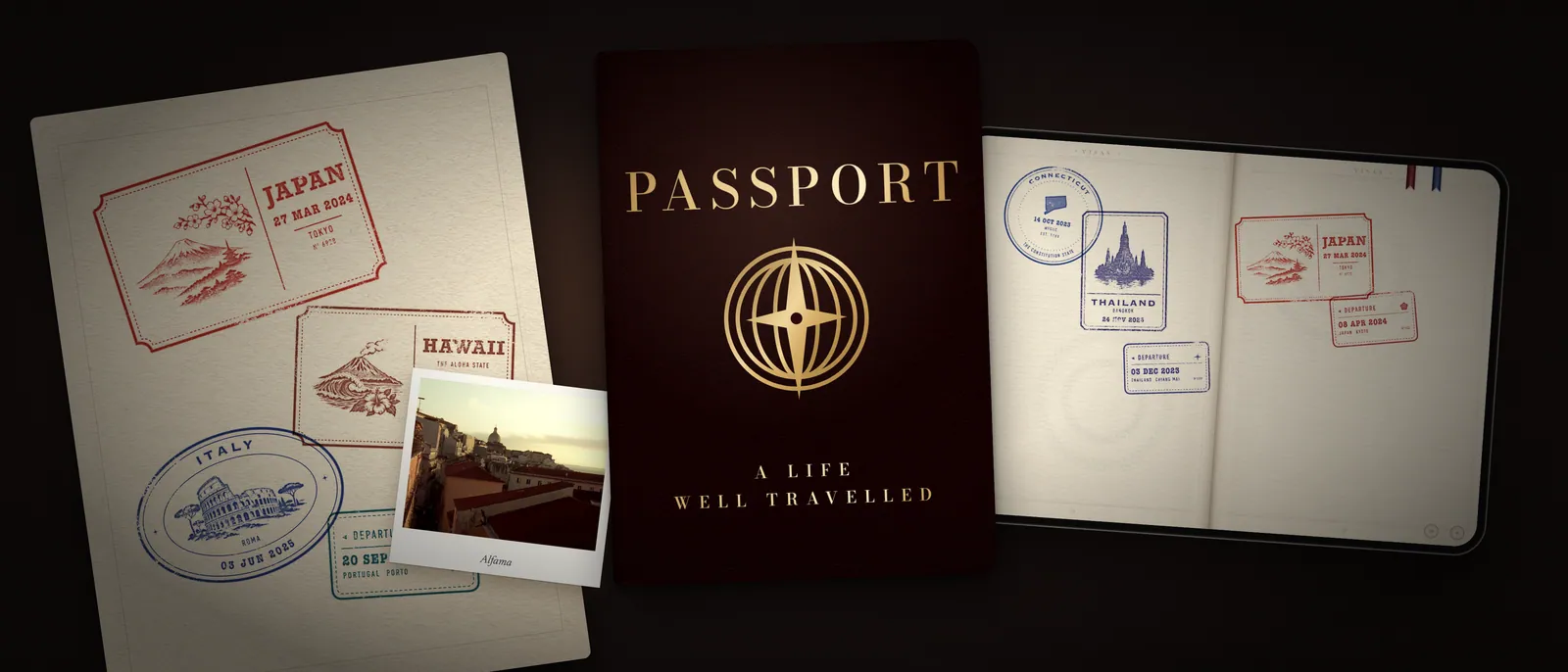
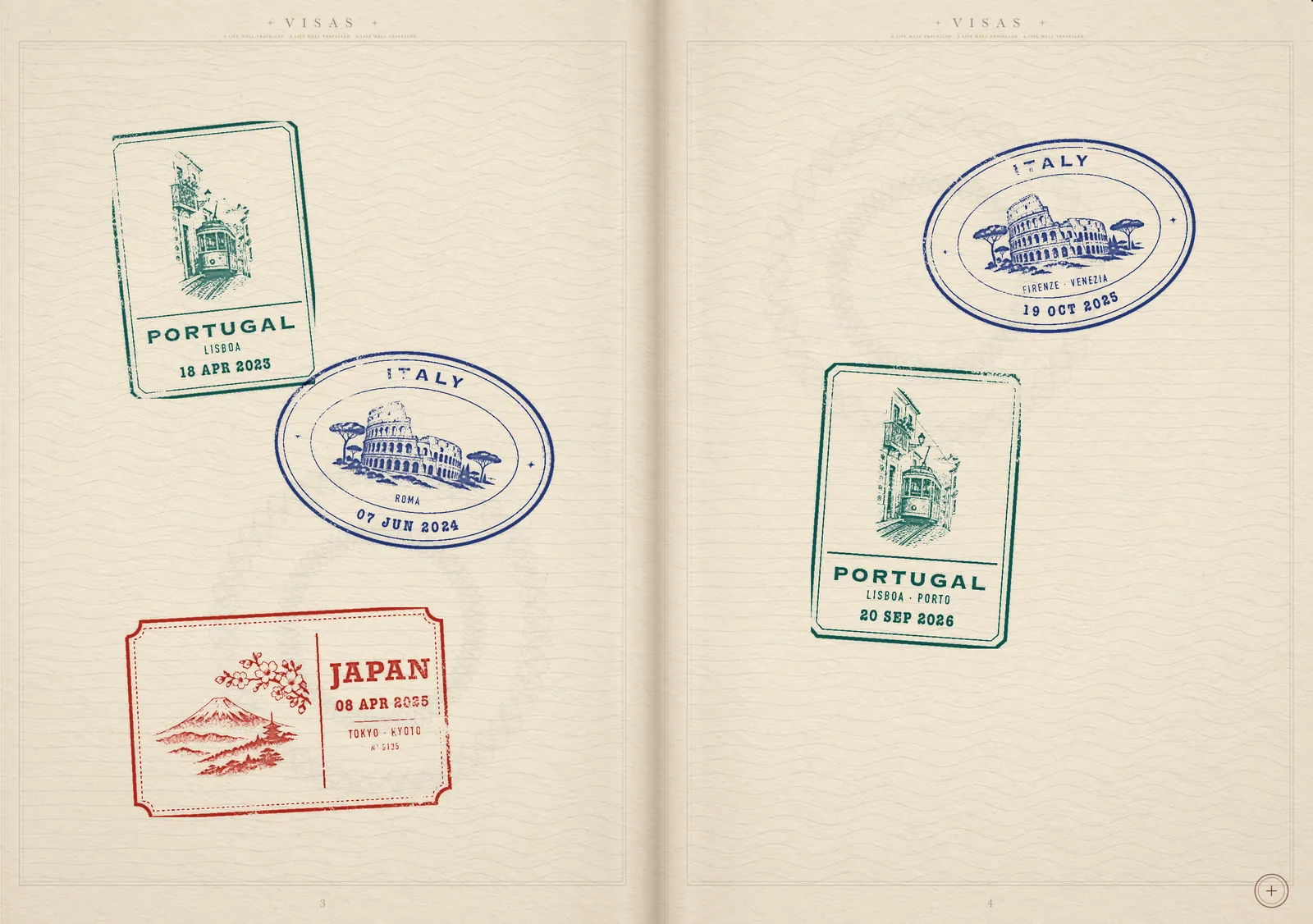
PASSPORT is being prepared for launch as a digital travel journal for iPhone. Its collectible stamps, visit dates, photos and notes are designed to hold a personal record across the years covered by several physical passports. You add the visits and memories; its artwork is a personal collection, not a transfer of official immigration stamps.
It cannot replace a passport, visa or other required travel document. The record it keeps is the one you choose to remember. If you're comparing ways to keep it, our country counter app guide explains what to look for.
Two questions worth settling before renewal
Should I send an already expired passport?
Follow the instructions for your issuing country and application route. For example, the UK renewal page requires the old passport, while the Canadian simplified renewal form instructs applicants to enclose Canadian passports that have not expired. An expired booklet should not be sent or withheld merely because another country's process works differently.
Can I move a valid visa to the new passport myself?
No: leave it in the original booklet and ask the issuing authority whether you need to carry both documents or arrange an official replacement. In the US example above, removing the visa invalidates it.
The next passport will have space for the next journey. The old one may still have a place at home, with its worn cover and crowded pages. Preserving a personal record lets those chapters sit together, wherever the documents themselves must go.
Your passport expires. Your travels don't. Discover PASSPORT and make room for the journeys between the stamps.